




















































































































































Table of Contents
Toggle7 Simple Health Changes to Reduce Chronic Disease Risk
Author: RVLNSV PRASAD
Updated On: September 2026
About Us
Author Bio
Editorial Policy
Contact Us

Introduction
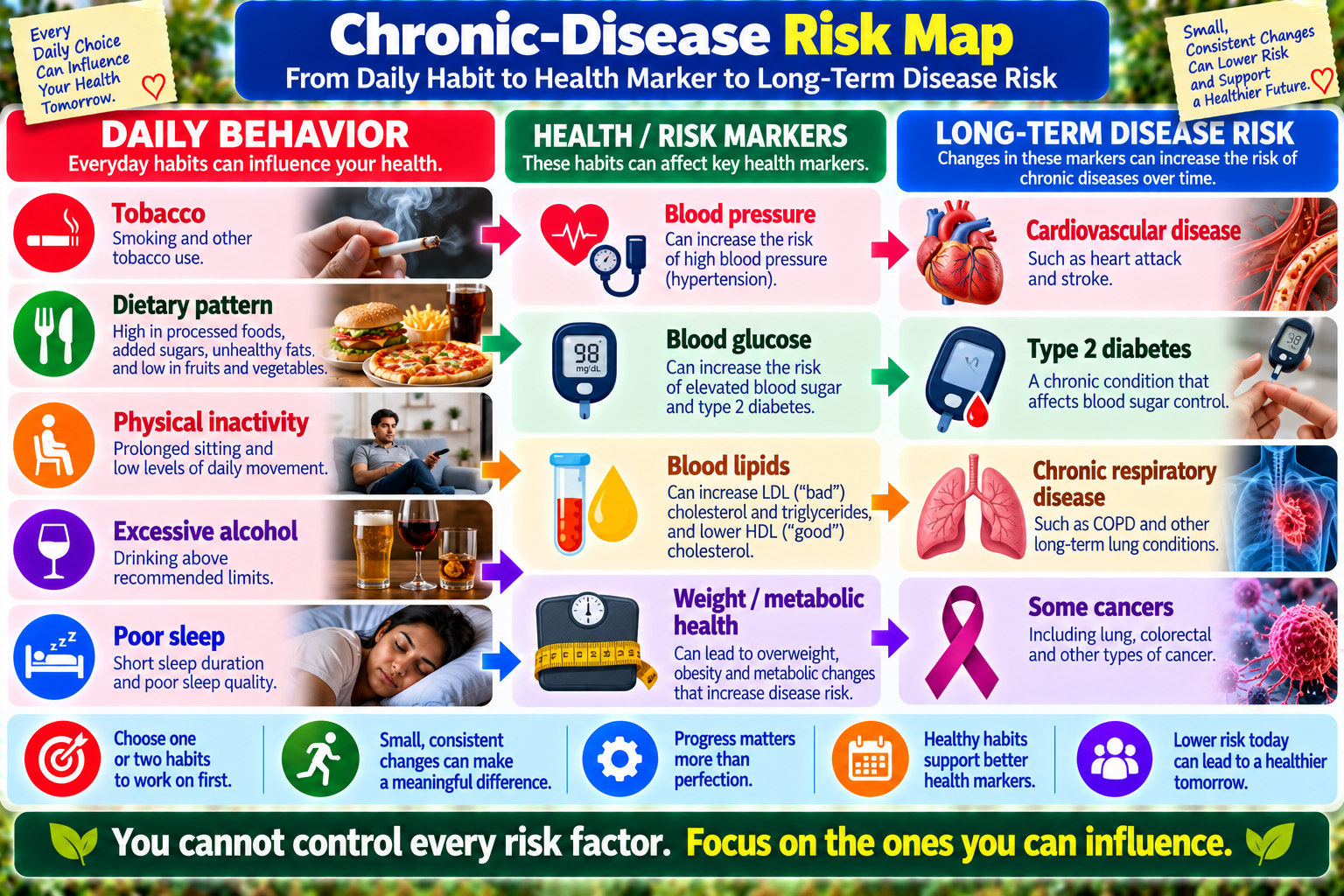
Chronic disease rarely comes down to one meal, one missed workout, one stressful week, or one number on a medical report.
Risk usually develops through a combination of factors, including age, genetics, family history, environment, tobacco exposure, diet, physical activity, alcohol use, sleep, metabolic health, and existing medical conditions.
Some of these factors cannot be changed.
Many others can.
That distinction matters because reducing the risk of chronic disease does not mean guaranteeing that heart disease, type 2 diabetes, cancer, or another long-term condition will never occur. Instead, prevention focuses on modifying the risk factors you can influence while identifying important health problems early.
The World Health Organization identifies tobacco use, physical inactivity, unhealthy diets, harmful alcohol use, and air pollution as important risk factors for noncommunicable diseases. WHO: Noncommunicable Diseases
Current CDC guidance similarly emphasizes tobacco avoidance, healthy eating, regular physical activity, limiting excessive alcohol, adequate sleep, preventive care, and knowing your family history. CDC: Preventing Chronic Diseases — What You Can Do Now
This is encouraging because chronic-disease prevention does not require a perfect lifestyle.
A better strategy is to identify the weakest part of your current routine and improve it gradually.
Quick Answer
If you want to reduce the risk of chronic disease, start with the factors you can realistically influence.
Eat a varied, nutrient-dense diet. Move regularly. Protect your sleep. Avoid tobacco. Limit excessive alcohol. Manage persistent stress. Keep up with appropriate preventive healthcare and screening.
These behaviors are particularly relevant to major noncommunicable diseases such as cardiovascular disease and type 2 diabetes, although their effects differ according to the disease and individual.
WHO identifies tobacco, physical inactivity, unhealthy diet, and harmful alcohol use as major behavioral risk factors for noncommunicable diseases. WHO: NCD Risk Factors
The goal is therefore not to become perfectly healthy overnight.
It is to gradually move your long-term risk in a healthier direction.
Key Takeaways
- Chronic diseases usually involve several interacting risk factors.
- Regular physical activity can reduce the risk of several chronic conditions.
- Dietary quality matters more than finding one “disease-preventing” food.
- Tobacco is a major preventable health risk.
- Excessive alcohol consumption can increase chronic disease risk.
- Adequate sleep belongs in a long-term health strategy.
- Healthy weight can matter, but body weight alone does not define health.
- Blood pressure, blood glucose, and cholesterol problems may develop without obvious symptoms.
- Family history can help determine which preventive measures deserve greater attention.
- Healthy habits reduce risk; they cannot guarantee that chronic disease will never occur.
What Does Chronic Disease Actually Mean?
Chronic diseases are long-lasting health conditions.
They include conditions such as cardiovascular disease, cancer, chronic respiratory diseases, and diabetes. WHO explains that these diseases usually result from a combination of genetic, physiological, environmental, and behavioral factors rather than one single cause. WHO: Noncommunicable Diseases
That point is important for responsible health content.
It would be inaccurate to tell readers that every chronic disease is simply caused by lifestyle.
Type 1 diabetes, for example, is different from type 2 diabetes. Some cancers have substantial inherited components, while other diseases may be strongly influenced by environmental or behavioral exposures.
Risk Factors You May Be Able to Modify
These can include:
- Tobacco use
- Physical inactivity
- Dietary pattern
- Excessive alcohol use
- Poor sleep
- Some aspects of metabolic health
- High blood pressure
- High blood glucose
- High cholesterol
- Some aspects of body weight
Factors You Cannot Simply Change
These include:
- Age
- Genetics
- Family history
- Some inherited conditions
- Previous medical history
Environmental and social conditions matter too.
WHO identifies air pollution as another important contributor to noncommunicable disease risk. WHO: Ambient Air Pollution and Health
So the better question is not
“How can I prevent every disease?”
It is:
“Which important risk factors can I influence?”
1. Move More Without Believing Exercise Must Be Extreme
You do not need to become a runner or spend hours in a gym to benefit from physical activity.
Walking counts.
Cycling counts.
Swimming counts.
Gardening counts.
Household movement counts.
Strength training counts.
WHO defines physical activity broadly as bodily movement that requires energy, including movement during transportation, work, household tasks, recreation, and exercise. Regular activity contributes to the prevention and management of cardiovascular disease, diabetes, and several cancers. WHO: Physical Activity
Current CDC chronic-disease guidance recommends at least 150 minutes of moderate-intensity physical activity each week for adults, together with muscle-strengthening activity on two days each week. CDC: Preventing Chronic Diseases
That does not mean everyone should immediately start at that level.
Use a “Movement Anchor.”
Instead of waiting for motivation, attach movement to something already in your day.
For example:
- After breakfast → 10-minute walk
- After lunch → short movement break
- After dinner → comfortable walk
- After work → brief strength session
The objective is to make movement easier to repeat.
Do Not Ignore Strength Training
Walking is useful, but strength work deserves a place in a long-term fitness routine.
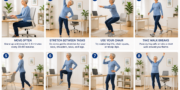
Depending on your ability, simple options include
- Chair squats
- Wall push-ups
- Resistance-band exercises
- Bodyweight movements
- Light dumbbell exercises
The best activity is not necessarily the most difficult one.
It is the one that fits your health, schedule, and current fitness level.
You can also see your related guide on the health benefits of exercise for additional practical ideas.
2. Build Meals Around Food Quality, Not Diet Labels
Nutrition advice can quickly become confusing.
One person promotes low-carbohydrate eating.
Another recommends plant-based meals.
Someone else focuses on high protein.
You do not necessarily need a diet label to improve your chronic-disease risk.
Start with food quality.
CDC recommends a balanced eating pattern containing a variety of vegetables, fruits, protein foods, dairy without added sugars, healthy fats, and whole grains while limiting highly processed foods, added sugars, saturated fat, and sodium. CDC: Healthy Eating and Chronic-Disease Prevention
WHO also identifies unhealthy diets as an important behavioral risk factor for noncommunicable diseases. WHO: Noncommunicable Diseases
A Practical Indian Meal Formula
You do not need expensive imported foods.
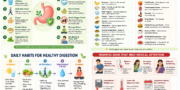
Try familiar foods such as
| Food group | Examples |
|---|---|
| Vegetables | Spinach, carrots, tomato, beans, cauliflower, gourds |
| Protein | Dal, chickpeas, rajma, eggs, fish, curd, paneer |
| Whole/minimally processed carbohydrates | Roti, oats, brown rice, millets |
| Fruit | Guava, banana, orange, papaya, apple |
| Healthy fat sources | Nuts, seeds, and appropriate cooking oils |
A simple meal might be:
Dal + vegetables + roti + curd
or:
Chana + vegetables + rice + salad
The goal is not perfection.
It is to make nutritious foods the foundation of your normal eating pattern.
Try the “Add Before You Remove” Method.
Instead of beginning with a long list of forbidden foods, add something beneficial first.
- Add vegetables to lunch.
- Add fruit to breakfast.
- Add dal or chickpeas to a meal.
- Add an appropriate protein source.
Replace one sugary drink with water.
This can make dietary change feel less restrictive.
Food Quality Is a Pattern
Eating one biscuit occasionally does not cause chronic disease, just as one salad does not prevent it. What matters most is your overall diet and lifestyle over time.
Long-term dietary patterns matter much more than individual foods.
3. Protect Sleep as Part of Chronic-Disease Prevention
Sleep is often the first health behavior sacrificed when life becomes busy.
Work runs late.
The phone stays beside the bed.
Television continues.
Then caffeine is used to compensate the next morning.
Repeated inadequate sleep is more important than an occasional bad night.
The CDC states that insufficient sleep has been linked with the development and poor management of conditions including diabetes, heart disease, obesity, and depression, and recommends that adults get at least seven hours of sleep daily. CDC: Preventing Chronic Diseases — Sleep
Create a “Sleep Landing Zone.”
Instead of simply telling yourself to sleep earlier, make the final part of your evening progressively quieter.
You might:
- Finish demanding work earlier.
- Reduce unnecessary notifications.
- Prepare tomorrow’s essentials.
- Keep your bedroom comfortable.
- Reduce stimulating activities before bed.
- Maintain a reasonably consistent sleep schedule.
A complicated routine is not necessary. What matters is building habits that are realistic enough to maintain consistently.
Do Not Panic About One Poor Night
An occasional late night is part of normal life.
The bigger issue is a persistent pattern of inadequate or disrupted sleep.
If you regularly struggle with sleep, snore heavily, wake repeatedly, or experience significant daytime sleepiness, speak with a healthcare professional rather than relying only on supplements.
4. Avoid Tobacco and Be Careful With Alcohol
This is one of the most important sections for an article about ways to prevent chronic disease.
Tobacco exposure is strongly associated with cardiovascular disease, respiratory disease, and many cancers.
WHO’s June 2026 tobacco guidance states that tobacco damages nearly every organ and that all forms of tobacco use are harmful. It also states that there is no safe level of exposure. WHO: Tobacco and Nicotine, June 2026
Quitting Tobacco Matters
A person might eat vegetables, exercise, and take supplements while continuing to smoke.
Those healthy behaviors do not erase tobacco-related risk.
If you smoke, quitting deserves serious attention.
Nicotine dependence can be difficult to overcome, so professional cessation support may be useful.
Secondhand smoke matters too.
Avoiding exposure protects both smokers who are trying to quit and people around them.
Alcohol Also Matters
WHO identifies harmful alcohol use as another important risk factor for noncommunicable diseases. WHO: Noncommunicable Diseases
CDC also notes that excessive alcohol use can contribute to high blood pressure, heart disease, stroke, liver disease, and several cancers. CDC: Preventing Chronic Diseases — Alcohol
The practical lesson is simple:
Do not treat alcohol as a necessary part of a healthy lifestyle.
If drinking has become frequent, excessive, or difficult to control, consider professional support.
5. Manage Stress by Fixing the Stress Cycle
Stress is not automatically harmful.
Some stress is part of normal life.
The problem is persistent stress combined with poor coping habits.
For example, stress may lead to:
Stress → poor sleep → fatigue → less exercise → convenience food → more stress
Breaking one part of that cycle can make the entire routine easier to manage.
Use the “Stress Spillover Check.”
Instead of asking only:
“Am I stressed?”
ask:
“Where is my stress showing up?”
| Stress spillover | Practical response |
|---|---|
| Staying awake late | Protect evening wind-down time. |
| Emotional eating | Prepare an easy, balanced meal. |
| No exercise | Take a short walk. |
| Constant phone checking | Create notification-free periods. |
| Social withdrawal | Contact someone supportive. |
| Increased alcohol use | Replace the stress ritual and seek help if needed. |
Try a Two-Minute Reset
When tension rises:
First 30 seconds: Notice what you are feeling.
Next 30 seconds: Relax your shoulders and jaw.
Next 30 seconds: Breathe comfortably and slowly.
Final 30 seconds: Ask what small action would help you move forward.
This is not a treatment for chronic disease.
It is simply a practical method for interrupting an automatic stress response.
6. Focus on Healthy Metabolic Markers, Not Just a Smaller Body
Body weight can influence chronic-disease risk, but it is not the only measure of health.
- Blood pressure matters.
- Blood glucose matters.
- Cholesterol matters.
- Physical fitness matters.
- Smoking status matters.
- Family history matters.
CDC identifies high blood pressure, high cholesterol, and smoking as major heart disease risk factors, while physical inactivity, obesity, diabetes, and excessive alcohol use can also contribute. CDC: Heart Disease Risk Factors
WHO similarly identifies raised blood pressure, overweight/obesity, high blood glucose, and abnormal blood lipids as important metabolic risk factors for NCDs. WHO: NCD Risk Factors
If Weight Management Is Appropriate, Avoid Extreme Dieting
Instead of chasing rapid weight loss, work on sustainable behaviors:
- Eat more vegetables.
- Include adequate protein.
- Choose fiber-rich foods.
- Reduce frequent sugary drinks.
- Move regularly.
- Include strength training where appropriate.
- Protect sleep.
- Address emotional eating.
Some people will lose weight.
Others may first see improvements in blood pressure, glucose, fitness, or eating habits.
Those improvements matter too.
Use a “Health Dashboard.”
Rather than watching only the scale, discuss appropriate health measurements with your healthcare professional.
| Health marker | Why it may matter |
|---|---|
| Blood pressure | Important cardiovascular risk factor |
| Blood glucose/A1C | Helps assess diabetes or prediabetes when indicated |
| Cholesterol/lipids | Helps assess cardiovascular risk |
| Weight trend | One part of metabolic health |
| Physical fitness | Reflects functional health |
| Tobacco exposure | Major modifiable risk |
Do not order every test simply because it exists.
Screening should reflect your age, medical history, and individual risk.
7. Use Preventive Healthcare Before You Feel Sick
- Healthy living is not only about what happens at home.
- Preventive healthcare matters too.
- High blood pressure can exist without obvious symptoms.
- High cholesterol may not make you feel different.
- Prediabetes can develop without clear warning signs.
Some cancers can be detected through screening before symptoms become obvious.
CDC explains that preventive care includes screening tests, vaccines, regular checkups, and other services designed to help prevent disease or identify problems earlier. CDC: Preventive Care and Chronic Disease Prevention
Know Your Family History
Family history can help identify elevated risk.
CDC’s August 2026 guidance explains that knowing family health history can help healthcare professionals determine appropriate screening and other preventive measures. CDC: Family Health History and Adults
Ask relatives about:
- Heart disease
- Stroke
- High blood pressure
- Type 2 diabetes
- Certain cancers
- Kidney disease
- Inherited conditions
Family history does not determine your future.
It helps you understand where prevention may deserve greater attention.
Keep a “Health Questions” Note
Before a routine appointment, write down questions such as
- Should my blood pressure be checked more frequently?
- Do I need diabetes screening?
- When should my cholesterol be checked?
- Which cancer screenings are appropriate for me?
- Are my vaccinations current?
- Does my family history change my screening needs?
This simple preparation can make preventive visits more useful.
What Healthy Habits Can — and Cannot — Do
| Healthy behavior | What it may help with | What it cannot guarantee |
|---|---|---|
| Physical activity | Fitness and lower risk of several chronic conditions | Prevent every disease. |
| Nutritious diet | Cardiometabolic health | Cancel genetic risk |
| Adequate sleep | Overall physical and mental health | Guarantee disease-free living. |
| No tobacco | Removes a major preventable risk | Make risk zero. |
| Limiting excessive alcohol | Reduces alcohol-related risks | Prevent every illness. |
| Stress management | Healthier coping and routines | Eliminate all stress. |
| Healthy weight where appropriate | Some metabolic risk factors | Define overall health by itself |
| Preventive care | Earlier detection of some problems | Detect every disease. |
| Knowing family history | Better risk awareness | Change your genes. |
The important concept is
Risk reduction is not risk elimination.
A Unique Strategy: Build Your “Chronic-Disease Risk Map”
Most health articles give everyone the same checklist.
Real life is different.
Your biggest risk may not be the same as someone else’s.
Group 1: Things You Cannot Change
- Age
- Genetics
- Family history
- Previous health conditions
Do not waste energy feeling guilty about these factors.
Group 2: Things You Can Influence
- Tobacco
- Physical activity
- Diet
- Sleep
- Excessive alcohol
- Preventive appointments
- Following prescribed treatment
This is where your effort can make a difference.
Group 3: Things You May Need Help Changing
- Nicotine dependence
- Alcohol dependence
- Persistent insomnia
- Severe obesity
- Chronic pain
- Depression or anxiety
- Uncontrolled blood pressure or diabetes
- Limited access to nutritious food
- Unsafe environments for exercise
These are not simply failures of motivation.
Sometimes professional or community support is necessary.
That is an important people-first principle that is often missing from generic chronic-disease articles.
The “Minimum Healthy Day” Strategy
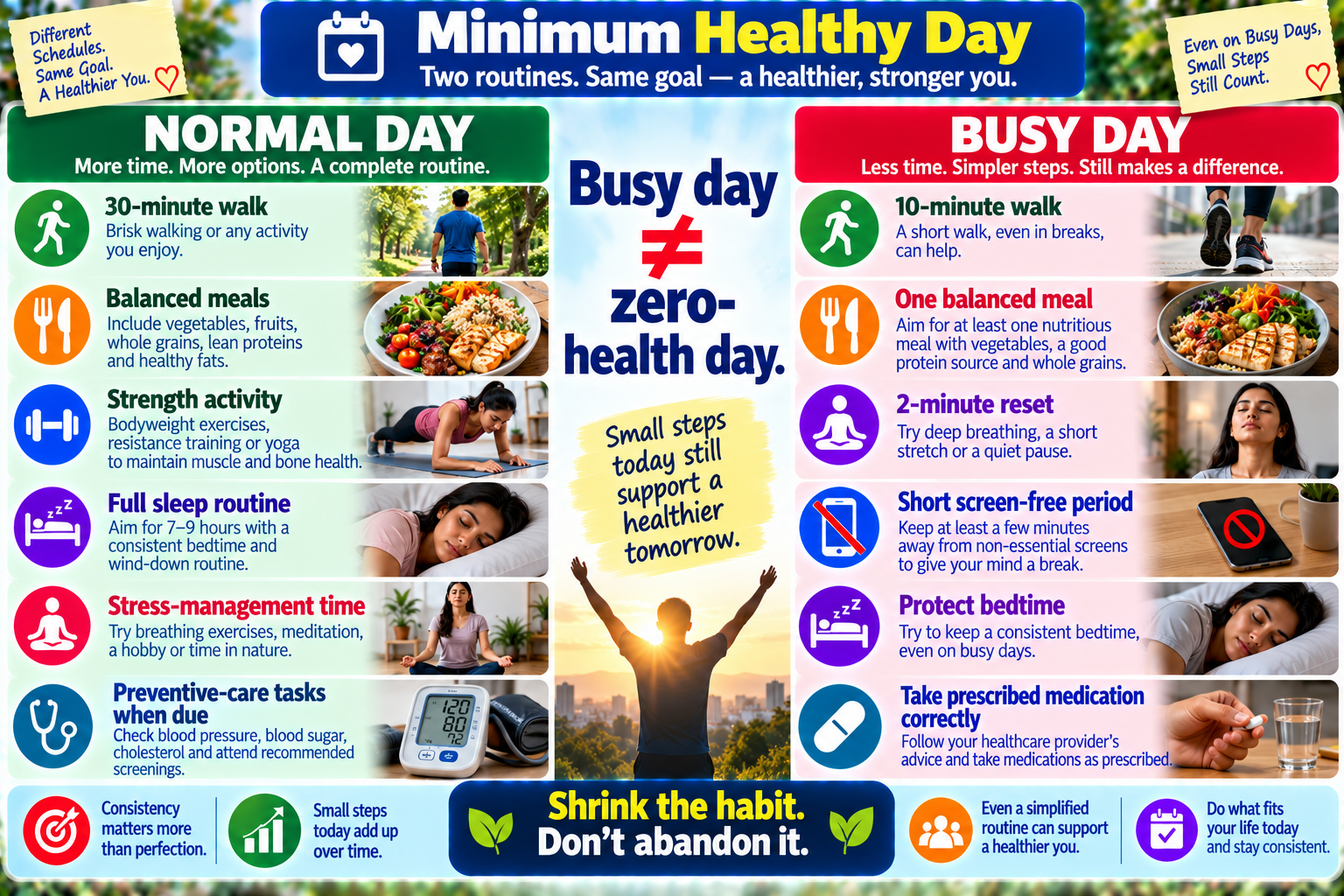
Healthy routines often fail on the busiest day.
Instead of abandoning everything, create a smaller version.
Your minimum day might include:
Movement: 10-minute walk.
Food: One balanced meal containing vegetables and protein.
Stress: Two minutes without screens or work.
Alcohol: Avoid excessive intake.
Tobacco: Continue your cessation plan.
Sleep: Protect your normal bedtime.
Medication: Take prescribed medicines as directed.
This is not your perfect health plan.
It is your continuity plan.
When life becomes difficult, reduce the size of the habit rather than abandoning it completely.
A Practical Indian Chronic-Disease Prevention Plate
Healthy eating does not need to look foreign.
Familiar foods can form the foundation of a nutritious pattern.
Try combinations such as
Dal + vegetables + roti + curd
Chana + vegetables + rice + salad
Rajma + vegetables + roti
Oats + fruit + nuts/seeds + milk or yogurt
WHO emphasizes healthy dietary patterns rather than one particular food, and its NCD guidance specifically highlights unhealthy diets as an important modifiable risk factor. WHO: Noncommunicable Diseases
Easy Meal Upgrades
Instead of removing rice completely:
Rice + dal + vegetables
Instead of plain poha:
Poha + vegetables + peas + an appropriate amount of peanuts
Instead of roti and potato alone:
Roti + dal/chana + vegetables
Instead of a highly processed afternoon snack:
Fruit + curd
or
Roasted chana
The goal is not to make every meal perfect.
It is to improve the overall pattern.
Common Mistakes in Chronic-Disease Prevention
Mistake 1: Trying to Change Everything at Once
Large lifestyle overhauls can become difficult to maintain.
Start with one or two important changes.
Mistake 2: Thinking Thin Automatically Means Healthy
Body size does not tell you everything about blood pressure, blood glucose, cholesterol, fitness, or tobacco exposure.
Mistake 3: Waiting for Symptoms
Some risk factors can remain silent.
That is one reason preventive screening exists. CDC: Preventive Care
Mistake 4: Using Supplements as Insurance
Supplements cannot erase the health effects of smoking, inactivity, chronic sleep deprivation, or excessive alcohol consumption.
Mistake 5: Treating Exercise as Punishment
Movement should support health rather than compensate for eating.
Mistake 6: Assuming Genetics Means Nothing Can Be Done
Family history can increase risk, but it does not mean preventive action is pointless. The CDC specifically recommends knowing and acting on family health history. CDC: Family Health History and Adults
Mistake 7: Believing Lifestyle Can Prevent Everything
Healthy behavior can reduce risk.
It cannot guarantee that every chronic disease will be avoided.
Mistake 8: Focusing on Small Nutrition Details While Ignoring Tobacco
If tobacco is part of your life, quitting may deserve far greater attention than debating minor differences between individual foods.
WHO states that all forms of tobacco use are harmful. WHO: Tobacco and Nicotine
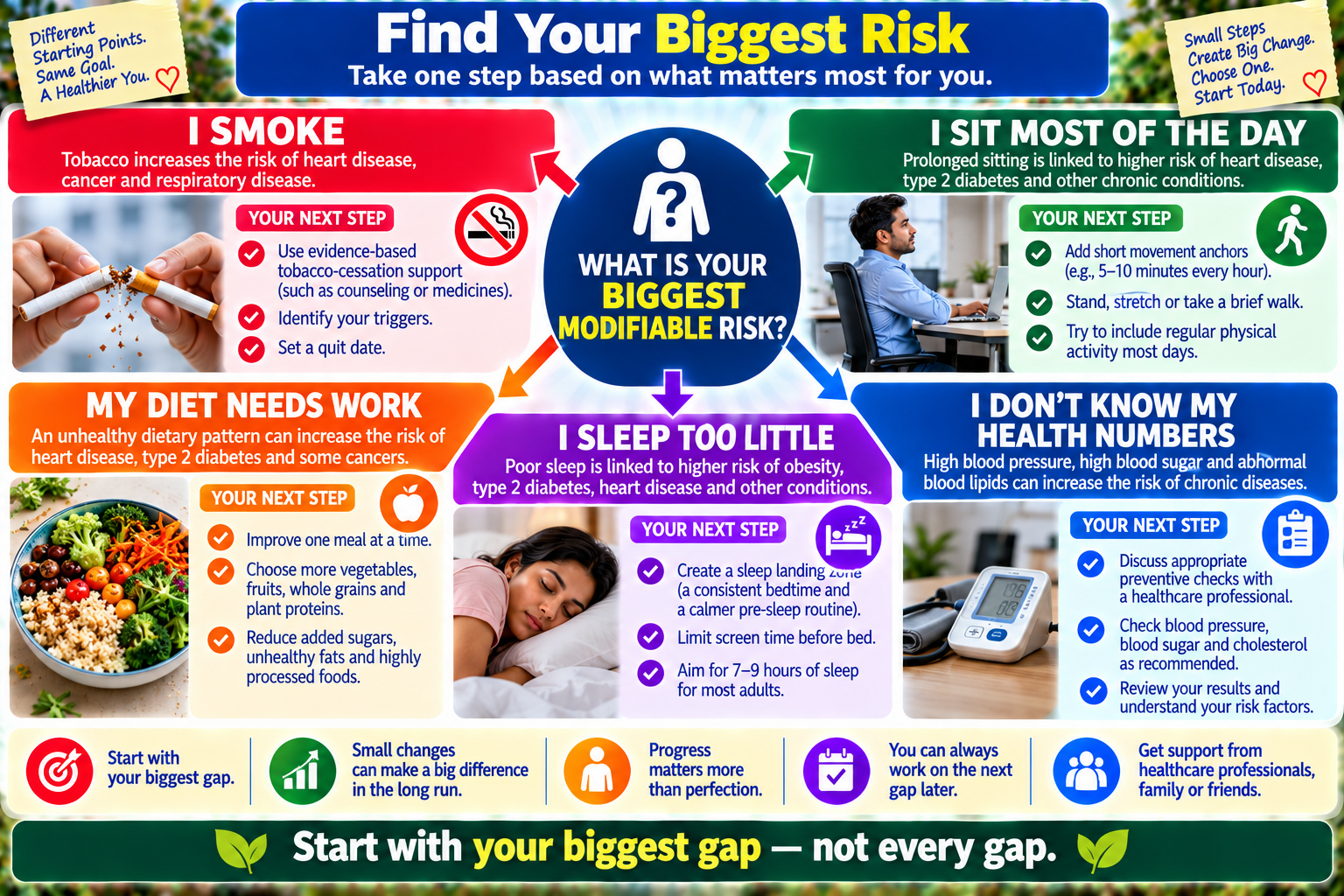
People-First Insight: Fix the Biggest Risk First
Imagine two people.
One person eats vegetables every day but smokes.
Another does not smoke but spends most of the day sitting.
Giving both people exactly the same advice misses an important point.
Instead, ask:
“What is the biggest modifiable risk in my life right now?”
For one person, tobacco use may be the main habit to address, while another may need to focus more on reducing physical inactivity.
Someone else may need to address high blood pressure, poor sleep, excessive alcohol use, or an unhealthy eating pattern.
You do not need to improve everything simultaneously.
You need to identify where improvement is most useful.
Personal Experience: Why Simpler Changes Are Easier to Maintain
My experience with healthy routines has taught me that complicated plans can be exciting at first but difficult to maintain.
When I try to change several behaviors simultaneously, the routine quickly starts feeling like another job.
A simpler approach has been more practical for me: choose one behavior, connect it to something already present in the day and repeat it until it becomes familiar.
Walking is a good example.
It requires little equipment and can fit around ordinary routines. Improving meals can work similarly. Rather than completely changing what I eat, adding vegetables, legumes, or another nutritious food to a familiar meal feels more manageable.
This is personal experience, not proof that the same approach will produce a particular medical result for everyone.
The medical evidence comes from research and public-health guidance.
Latest Research Developments in Chronic-Disease Prevention
Researchers Are Looking at Combined Lifestyle Patterns
Modern prevention research increasingly examines groups of behaviors rather than treating diet, exercise, sleep, and tobacco exposure as completely separate issues.
This reflects real life.
People who exercise regularly may also have different sleep patterns, diets, and healthcare access.
That is why observational research needs careful interpretation.
Still, public-health guidance consistently identifies tobacco use, physical inactivity, unhealthy diets, and harmful alcohol use as major modifiable risk factors. WHO: NCD Risk Factors
Physical Activity Is More Than Formal Exercise
Physical activity includes walking, transportation, household work, occupational movement, and recreational activity.
WHO specifically notes that physical activity is associated with lower risk of cardiovascular disease, type 2 diabetes, and several cancers, while sedentary behavior is associated with poorer health outcomes. WHO: Physical Activity
That creates a practical lesson:
A 30-minute workout can be valuable, but the rest of your day also matters.
If you sit for long periods, look for opportunities to stand and move throughout the day.
Metabolic Risk Factors Are Becoming More Central
WHO identifies four important metabolic changes associated with NCD risk:
- Raised blood pressure
- Overweight/obesity
- Raised blood glucose
- Abnormal blood lipids
These can develop alongside behavioral risk factors such as unhealthy diet and insufficient physical activity. WHO: NCD Risk Factors
This is why chronic-disease prevention should not focus only on appearance.
Knowing important health measurements can provide information that cannot be seen in a mirror.
Preventive Care Is Part of Prevention
Current CDC guidance makes this especially clear: healthy behaviors are only part of prevention, while routine preventive care can help identify health problems early. CDC: Preventive Care
That means a strong prevention strategy combines:
healthy behavior + risk assessment + appropriate screening + timely treatment
rather than relying on lifestyle alone.
Family History Is Becoming More Actionable
Family history is not simply something interesting to discuss at a family gathering.
CDC’s August 2026 guidance explains that family health history can help healthcare professionals determine which screening tests or preventive interventions may be appropriate and when. CDC: Family Health History and Adults
That makes family history a practical prevention tool.
A 7-Day Chronic-Disease Risk Reduction Starter Plan
Day 1: Know Your Starting Point
Write down:
- Typical physical activity
- Sleep schedule
- Tobacco exposure
- Alcohol intake
- Typical meals
- Last blood-pressure check
- Last routine medical visit
- Important family history
Day 2: Add Movement
Take a comfortable walk or another suitable activity.
Day 3: Improve One Meal
Add vegetables and an appropriate protein source.
Day 4: Protect Sleep
Create a realistic bedtime and reduce unnecessary late-night stimulation.
Day 5: Review Tobacco and Alcohol
If you use tobacco, consider evidence-based cessation support.
Review whether alcohol has become a regular response to stress.
Day 6: Check Preventive Care
Ask whether you are due for appropriate blood pressure checks, blood tests, vaccination, or age- and risk-appropriate screening.
Day 7: Choose Three Sustainable Habits
Do not try to maintain every strategy in this article.
Choose the three that address your biggest current gaps.
Then repeat them.
Frequently Asked Questions
Can chronic disease really be prevented?
Some chronic diseases and complications can be prevented or delayed by addressing modifiable risk factors, but not every chronic disease is preventable.
WHO identifies tobacco, unhealthy diets, harmful alcohol use, and physical inactivity as important NCD risk factors. WHO: Noncommunicable Diseases
What is the easiest way to reduce chronic disease risk?
There is no single best habit for everyone.
If you smoke, quitting tobacco may be an important priority. For someone who is physically inactive, adding regular movement can be a practical starting point, while checking blood pressure regularly can help identify an otherwise unnoticed risk.
Can walking reduce chronic disease risk?
Walking contributes to physical activity, and physical activity is associated with a lower risk of several chronic diseases. WHO specifically identifies regular physical activity as important for preventing and managing NCDs. WHO: Physical Activity
Walking cannot guarantee disease prevention.
Can healthy eating prevent type 2 diabetes?
Healthy eating, physical activity, appropriate weight management, and avoiding tobacco can help prevent or delay type 2 diabetes in people at risk. WHO: Diabetes
Type 1 diabetes is different and should not be described as preventable simply through lifestyle.
Which health numbers should I know?
Depending on your age and risk profile, blood pressure, blood glucose, and cholesterol may be important.
A healthcare professional can determine which measurements are appropriate and how frequently they should be checked.
Does family history mean I will develop the same disease?
No.
Family history can increase risk, but it does not guarantee an outcome. It can help your healthcare professional determine appropriate preventive steps and screening. CDC: Family Health History and Adults
Can supplements prevent chronic disease?
Supplements should not be treated as substitutes for healthy eating, physical activity, tobacco avoidance, adequate sleep, or appropriate medical care.
Specific supplements may be appropriate for a diagnosed deficiency or particular medical situation, but routine supplementation should be based on individual need.
Is it too late to improve health after 40 or 50?
Healthy behaviors can remain worthwhile throughout adulthood.
Your starting point and medical conditions may change how you approach diet, exercise, weight management, and screening, so the plan should be individualized.
A Simple Chronic-Disease Prevention Checklist
Once a month, ask yourself:
| Question | Yes/Needs Work |
|---|---|
| Am I physically active regularly? | |
| Do most of my meals contain nutritious foods? | |
| Am I eating vegetables and fruits regularly? | |
| Am I protecting adequate sleep? | |
| Am I avoiding tobacco? | |
| Am I avoiding excessive alcohol? | |
| Do I have a healthy way to manage stress? | |
| Do I know my blood pressure when appropriate? | |
| Am I current with recommended preventive care? | |
| Do I know my important family health history? |
You do not need ten perfect answers.
Look for the answer that needs the most attention.
That can become your next health priority.
Author Note
This article is designed to make chronic-disease prevention practical rather than frightening.
Health information can easily become a long list of things people are supposedly doing wrong. That approach ignores work schedules, family responsibilities, finances, physical limitations, food availability, and access to healthcare.
The goal here is different.
Use the evidence to identify risks you can influence, choose a manageable starting point, and build from there.
Personal experience in this article is presented as personal experience rather than medical evidence. The medical claims are supported by public health organizations and research.
Medical Disclaimer
This article is for general educational purposes and is not a substitute for medical diagnosis, treatment, or individualized preventive care.
Your risk of chronic disease depends on factors such as age, family history, existing medical conditions, medications, tobacco exposure, alcohol use, physical activity, diet, blood pressure, blood glucose, cholesterol, and other individual circumstances.
Do not stop prescribed medication or delay recommended medical care because of information in this article.
If you have diabetes, heart disease, kidney disease, cancer, high blood pressure, severe obesity, or another chronic condition, discuss lifestyle changes with an appropriately qualified healthcare professional.
Fitness Disclaimer
Physical activity should be appropriate for your current health and fitness level.
If you have been inactive for a long period, increase activity gradually.
People with significant cardiovascular, respiratory, musculoskeletal, or other medical conditions may need individualized exercise guidance before beginning vigorous exercise.
Stop exercise and seek appropriate medical attention if you develop severe chest pain, fainting, unusual breathing difficulty, or another concerning symptom.
Research Methodology
This article prioritizes current guidance from major public health organizations, particularly the World Health Organization and the U.S. Centers for Disease Control and Prevention.
The latest available 2025–2026 guidance was prioritized where relevant, including current CDC chronic-disease prevention and family-health-history information and WHO’s 2026 tobacco guidance.
The article distinguishes established risk factors from individual anecdotes and avoids presenting lifestyle changes as guarantees of disease prevention.
Where risk depends on individual circumstances, the article recommends appropriate professional assessment rather than universal testing or treatment.
Strong EEAT Evidence for Readers
The following sources are directly relevant to the recommendations in this article and have been linked at the exact points where their evidence is discussed above:
- CDC — Preventing Chronic Diseases: What You Can Do Now
- WHO — Noncommunicable Diseases
- WHO — NCD Risk Factors
- WHO—Physical Activity
- WHO — Tobacco and Nicotine, June 2026
- CDC — Heart Disease Risk Factors
- CDC — Preventive Care
- CDC — Family Health History and Adults, August 2026
Conclusion
You cannot control every factor that influences chronic disease.
You cannot change your age or rewrite your family history. Healthy living also cannot guarantee that cancer, heart disease, diabetes, or another chronic condition will never occur.
But prevention is not powerless.
Tobacco use, physical inactivity, unhealthy diets, and harmful alcohol use remain major modifiable risk factors for noncommunicable diseases. WHO: Noncommunicable Diseases
Physical activity can contribute to preventing and managing cardiovascular disease, diabetes, and several cancers. WHO: Physical Activity
Preventive healthcare can also identify some problems before they become more serious, while family history can help guide individualized screening decisions. CDC: Preventive Care CDC: Family Health History and Adults
The most useful strategy is therefore not to chase perfect health.
Identify your biggest modifiable risk.
- If you smoke, work toward quitting.
- If you rarely move, begin with manageable activity.
- If your meals are dominated by highly processed foods, improve one meal first.
- If sleep is repeatedly sacrificed, protect your bedtime.
- If you have not checked important health markers or attended appropriate preventive care, make that your next step.
Small actions are not valuable because they are dramatic.
They become valuable because you can repeat them.
That is the practical meaning of trying to reduce the risk of chronic disease: not controlling everything that might happen in the future, but steadily improving the health factors you can influence today.
Similar Topics
- 10 Causes of High Blood Pressure & Treatment
- 15 Effective Ways To Lower Your Cancer Risk
- 12 Best Ways To Lower Blood Pressure
- Weight Loss Category
- Home
Post Views: 1,941










[…] 7 Simple Health Changes to Reduce The Risk of Chronic Disease […]
[…] 7 Simple Health Changes to Reduce The Risk of Chronic Disease […]
[…] 7 Simple Health Changes to Reduce The Risk of Chronic Disease […]
[…] 7 Simple Health Changes to Reduce The Risk of Chronic Disease […]
[…] 7 Simple Health Changes to Reduce The Risk of Chronic Disease […]
[…] 7 Simple Health Changes to Reduce The Risk of Chronic Disease […]
[…] 7 Simple Health Changes to Reduce The Risk of Chronic Disease […]
[…] 7 Simple Health Changes to Reduce The Risk of Chronic Disease […]
[…] 7 Simple Health Changes to Reduce The Risk of Chronic Disease […]